Monday, June 1, 2020

The 4 Snackable Content Formats Every Marketer Should Understand

Let's imagine a world where I just started my own lifestyle brand called Lightning on Fire Inc.

You're probably thinking, "Wow, that name rules! But what do you sell?"

We sell a lifestyle.

Now, you're probably wondering, "Wow, that sounds like it rules! But what does that mean?"

Well … we don't actually know yet. What we do know is that we want to create some content to get our marketing efforts off the ground. But our staff isn't great with long-form articles, and Lightning on Fire's target audience is looking for content they can consume quickly and share consistently.

In this case, we would try to produce what's known as snackable content — which is exactly what it sounds like. It's essentially the content equivalent of chips or pizza bagels as opposed to legitimate meals.

Here, we'll get some more perspective on what the term "snackable content" entails and learn about four of the most basic yet effective formats for creating it.

It's easy to assume that creating snackable content is inherently easier than long-form content, and in some ways, it definitely is. But snackable content creation comes with a host of its own challenges and strategies. It's a different game with different rules, and its potential payoffs can be more immediate and wider-reaching than long-form content.

The object of creating snackable content is to offer immediate entertainment or enrichment, prompt social sharing, and attract new leads as a result. And certain content mediums facilitate that process particularly well.

Here are four of the easiest, most straightforward snackable content formats that can lead to meaningful, lucrative outcomes if done right.

1. Quote Graphics

A compelling quote can capture attention in itself, but supporting one with captivating visuals adds a new dimension to the interest it can generate. Think of your quote as the entree to a Michelin star meal — a cut of filet mignon (or a lentil stuffed eggplant if you're vegetarian).

It's the centerpiece of the dish, and it's delicious in its own right, but some side dishes and "eye-eats-first" presentation would take it to another level. That's the fundamental principle behind quote graphics. The engaging backdrop, distinctive font, and other engrossing visual elements fill up the rest of the plate and turn it from a tasty a la carte entree to a perfectly snackable, five-star meal.

If you can find or create quote-oriented content relevant to your business, you can command and retain the attention of potential customers. Here's an example of a snackable quote graphic from my hypothetical lifestyle brand.

Snackable Content example 1

Now, this graphic is clearly in jest, and no one actually calls me "Money Machine" — no matter how many times I ask them to — but it's still an example of an original quote graphic, specific to the nature of a brand. However, that doesn't necessarily have to be the case.

If there are quotes you find particularly cool or inspirational that are in keeping with your messaging, use them and provide attribution. Here's an example of a graphic centered around a quote from Muhammad Ali.

Snackable content example 2

Image Source: USA Today

If a quote like that speaks to you or could complement your marketing efforts, use it, support it with interesting images, and cite your sources. As I said, quotes are inherently compelling, but visual support makes them engagingly snackable.

2. Memes

Here, we have my favorite format — at least the one I like making the most. Memes perfectly encapsulate snackable content as a concept. They're immediate, specifically-tailored to be entertaining, and can be easily scrolled through and shared. Here's a meme I made to support Lightning on Fire's content marketing efforts:
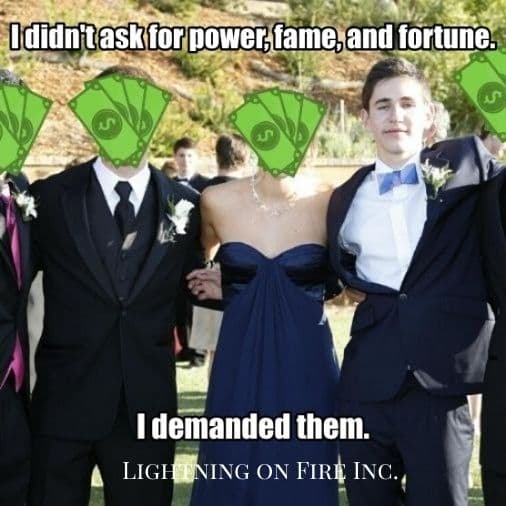
Snackable content example Meme

Creating memes is a delicate art — especially for something so blunt and seemingly straightforward. If you're using memes to support your marketing efforts, you need to be more careful than you might assume. Corporations have been known to co-opt different meme formats and run them into the ground. British TV provider Freeview even made a meme about brands ruining memes:
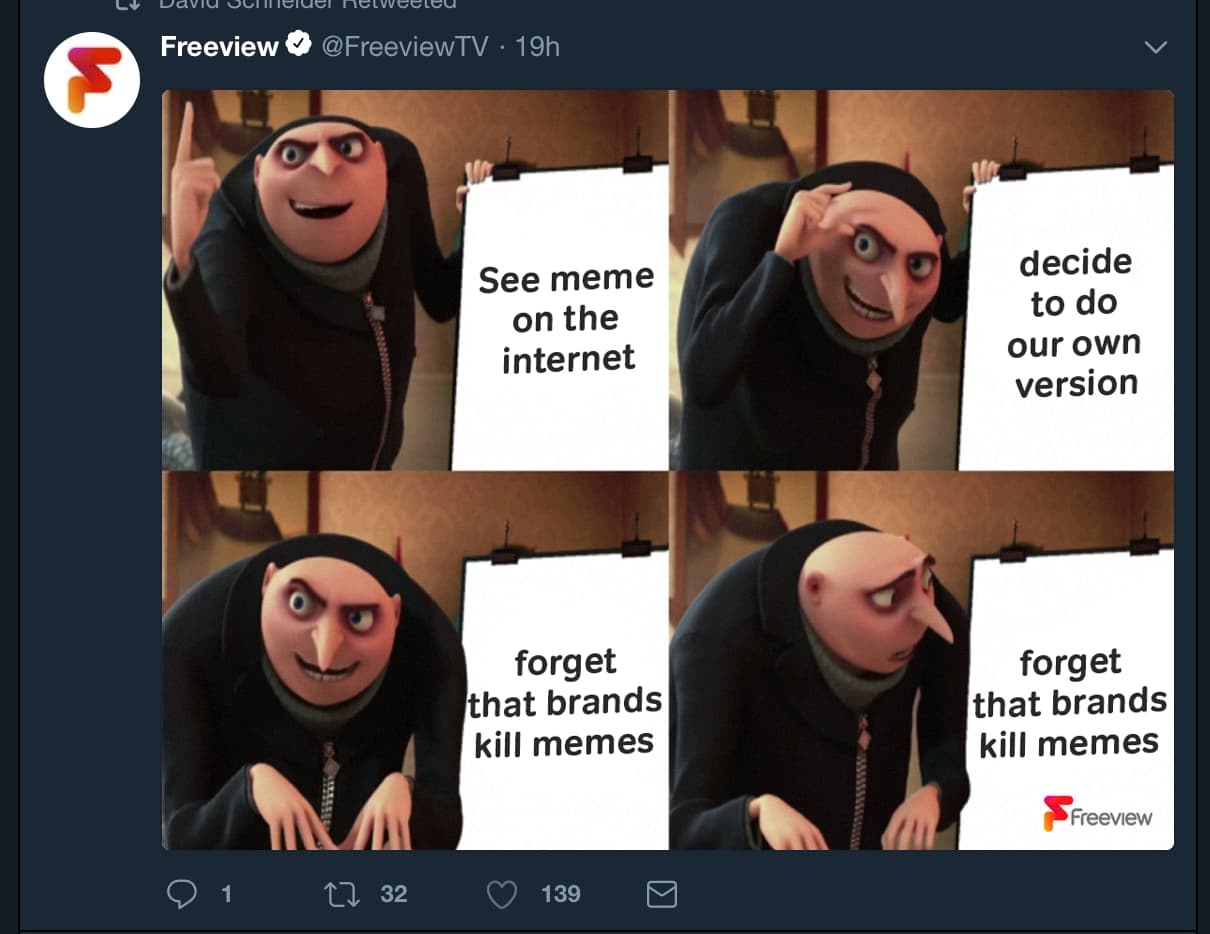
Snackable content example meme 2

Image Source: Freeview

That being said, if you can consistently make entertaining memes tastefully — without upsetting or irritating the members of your audience that are really into memes — you'll wind up with a wealth of delightfully snackable content.

3.Infographics

The infographic, as a format, is one of the best mediums for relaying informative, meaningful content without sacrificing snackability. It's fun, engaging, and practical — with a fairly dynamic range of applications. For instance, they can be used as structured "how-to" guides for different processes, like this example from HubSpot.
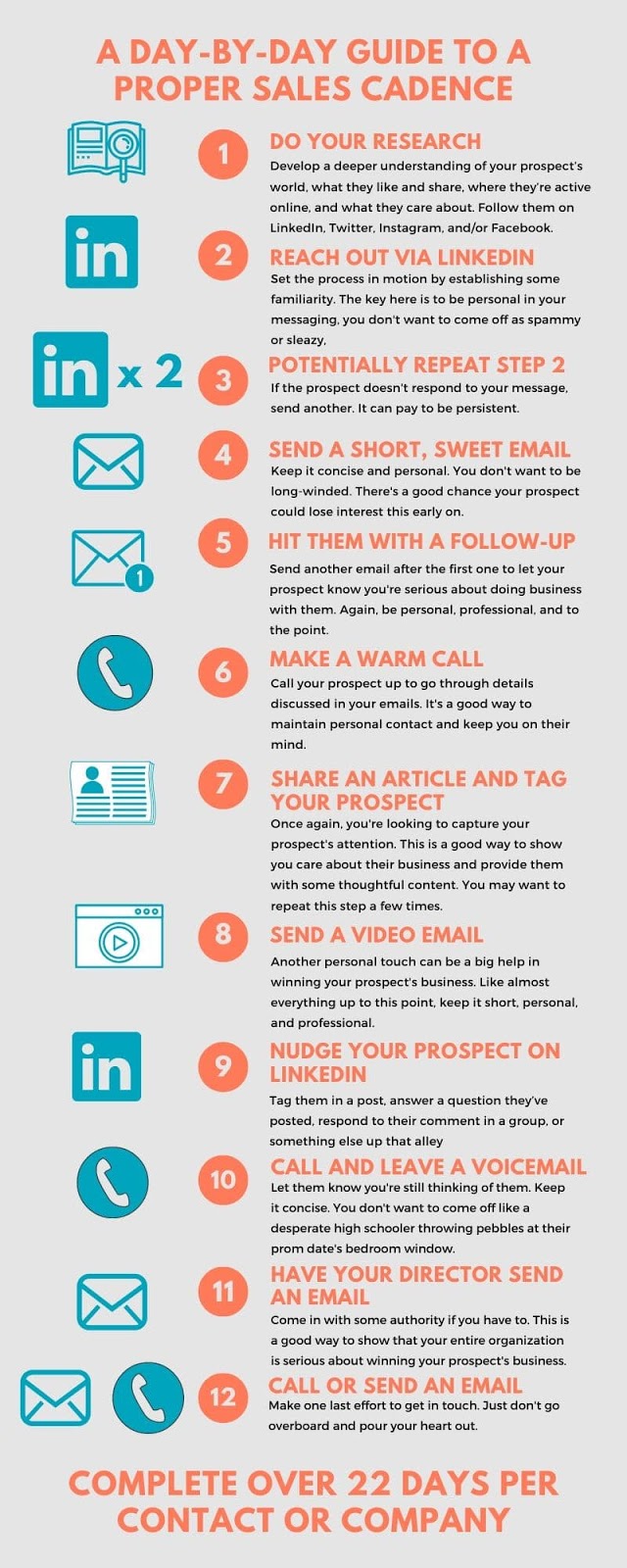
Snackable content example infographic 1

Image Source: HubSpot

But infographics don't have to be structured or sequential. They can also be used to convey general, interesting facts or statistics, like this example from the good people over here at Lightning on Fire, Inc.
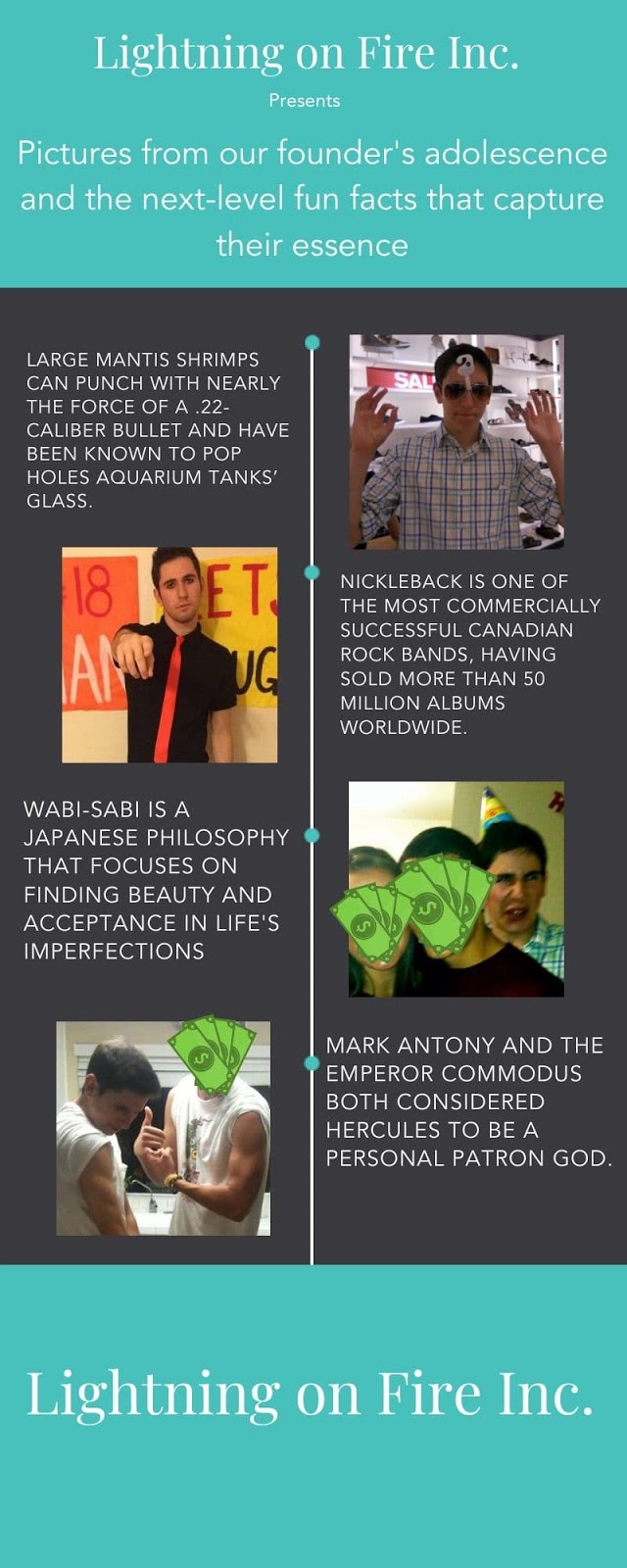
Snackable content example Infographic 2

Infographics are more accessible and dynamic than conventional written text — and those qualities are the essence of snackable content. They're meant to be straightforward and easy to gloss over while still being enriching. Though there will always be information that's too serious or technical to summarize and set against pretty pictures, infographics might be the best way to project valuable information in a snackable package.

4. Gifs

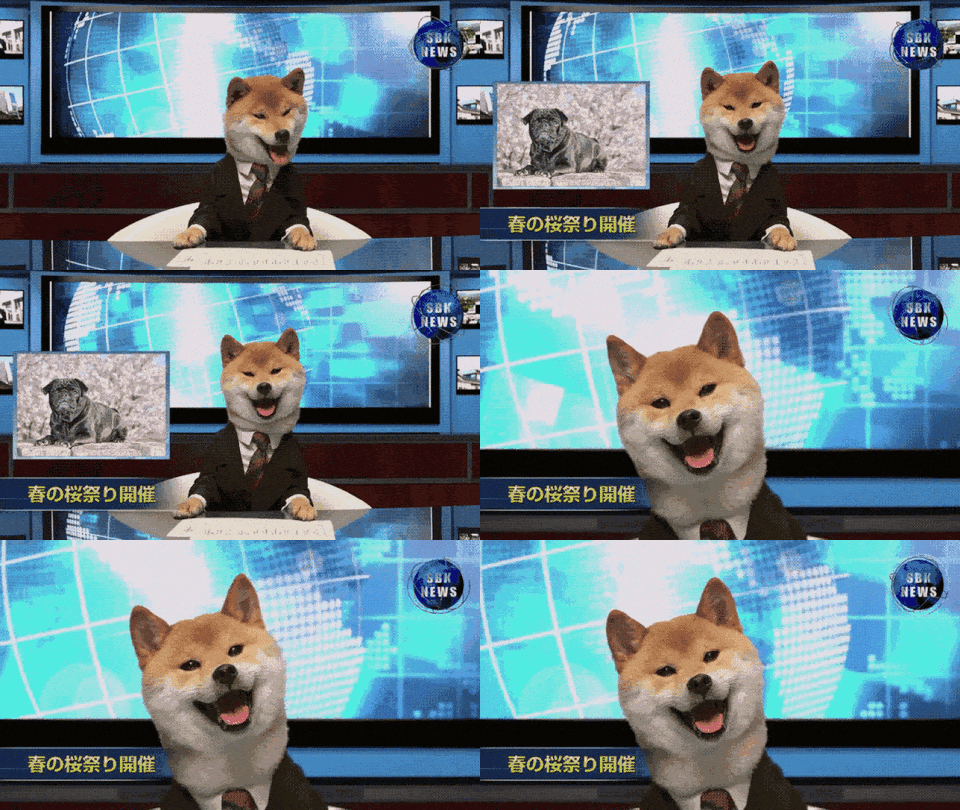
Gifs are another type of compulsively shareable form of snackable content with tremendous potential to catch on and go viral. As a format, gifs are extremely versatile. They can be used to show short-form videos silently, show captivating images on loop, and capture the essence of specific emotions and reactions — among several other applications.

Some gifs are almost purely for the sake of entertainment. This one is a favorite of mine:
Snackable content example gif 1

Image Source: GIPHY

But that's not their only function. They can be an incredibly useful marketing tool as well. Here's a promotional gif that supported the release of Terminator: Dark Fate:

Snackable content example gif 2

Image Source: Contently

It's an awesome, striking image and a perfect example of a company producing a high-quality, snackable gif. It's visually compelling and could be worth sharing just for that fact, alone. The format also works well for quick how-to videos or snippets of product demonstrations.

Original gifs are similar to original memes in that they have tons of sharing potential, but just as much potential to be dead on arrival. If you intend to create and share gifs over social media or other channels, put effort, thought, and fine touch into them. And always have multiple people look them over.

A sound web presence can be mission-critical to the success of any company's marketing strategy. If you can supplement and populate yours with solid snackable content, you're going to be in an excellent position to expand the reach and efficacy of your online marketing efforts. You want people to share your content, so give them something easy to share.

Google Can Use Historic Data For Ranking Your Site In Search

John Mueller of Google confirmed on Friday's webmaster hangout video that Google does and can use historic or legacy data about your web site for ranking purposes. He gave a few examples of how Google uses it; your links over time, the adult SafeSearch filter and some of Google's quality algorithms.

Bing Won't Rule Out Meta Keywords Tag Forever

In 2011, Bing said they do use the meta keywords tag. In 2014, Bing said the meta keywords tag was "dead in terms of SEO value." Now, Bing won't say if it is being used or not being used now or in the future.

Google Tests Blue Snippet Headers

It looks like Google is testing blue snippet headers in the mobile results. I believe this is an ongoing limited test but I figured I'd share it. Here are screen shots from Valentin Pletzer on Twitter of this in action.

John Mueller's COVID Haircut

Google's John Mueller Got A Haircut

4 Ways Small Businesses Can Advertise on Amazon [IG]

In 2020, advertising on Amazon is undoubtedly one of the most effective options for getting your products or services in front of a large audience.

In fact, 56% of consumers visit Amazon before any other site.

I'm all too familiar with the power of Amazon. It's now the first site I visit to shop for almost anything, ranging from vacuum cleaners to Mother's Day gifts to workout gear. Best of all, it's a great option for discovering new brands.

Amazon offers multiple options for small businesses looking to advertise tangible products on the platform — plus, opportunities to advertise non-tangible services, as well. But oftentimes, the e-commerce giant can feel overwhelming or out-of-reach for small businesses.

Fortunately, the folks at Business Financing Co. put together the following infographic, which explores four options for small businesses looking to advertise products on Amazon, plus alternative options for small businesses with non-tangible services.

Keep reading, and then decide for yourself which option is best-suited for your own marketing strategy. Additionally, take a look at The Ultimate Guide to Amazon Advertising if you're interested in creating a comprehensive Amazon advertising strategy. 

A-Small-Business-Guide-to-Amazon Advertising (1)

How to Transition from In-Office to Remote Work

Going into the office every day, I was comfortable. I was in a smooth routine.

I would show up every morning at 8:30 a.m., have a smoothie, eat breakfast, and make my way to my desk. Happily, I greeted coworkers as they filed into our section. At lunchtime, I would enjoy a meal at my desk or in the lobby and work from a different area in the office until it was time to leave.

Then, suddenly, I had to begin working remotely full-time.

I was comfortable with the idea. I'd worked from home a couple of times before, and I'm an introvert. In many ways, this sounded like a dream come true: I could experience a full work day from the comfort of my home every day.

Let's talk about some things to remember when you're transitioning from working in the office to working remotely.

1. Gather all of the materials you need to complete your work.

When you begin to transition to remote work, your work setup will change. For instance, you might not have double monitors. You may or may not have a desk, and it might not rise like your desk at the office.

In order to make the transition more smooth, think about the hardware and software you absolutely will need in order to successfully complete your job duties. Check with your company to see if they have support for necessary hardware.

If you're used to using an external mouse, maybe you can learn shortcuts using the trackpad on your laptop.

Part of the transition is finding solutions that are applicable to your current situation. Remember, you can always use your colleagues as a resource — ask them about any hacks they may have discovered during their transition that you could leverage for inspiration.

2. Reconsider the meetings on your calendar.

Before going remote, there were "unofficial" meetings I would have with colleagues sporadically. For example, sometimes an unplanned coffee chat would happen if I spotted a coworker getting their morning latte nearby. Small, random meetings like these were the perfect way to catch up with associates outside of my direct team.

Going remote, there's less of a chance to bump into your office buddies. Think about adding these coffee chats to your calendar once every couple of weeks. That way, you can still catch up over morning lattes.

Additionally, maybe the in-person standup meetings you have with your team eery morning won't be as necessary as the nature of your job changes. Consider the routinized meetings you'll have on your schedule and if you can rework or reduce them.

3. Let your team know about changes to your schedule.

Remote schedules can be unpredictable. Sometimes, you'll have workdays that go exactly according to plan. But other times, life intervenes, and you might have to modify your schedule due to other things that are shifting in your life.

If this happens, communicate with your team about how your schedule may change. Maybe you and your roommates switch between who gets to use the living room to take meetings during the day, or you have to be away from your desk for a while to care for your family.

You may find that some situations will have to adapt to the way you work. Making the line of communication clear between you and your team would clear up misunderstandings down the line.

4. Set boundaries between your personal and professional life.

Something I've found with remote work is that it's so easy to work outside of my normal hours. I tend to get in "The zone" when I'm working and this leads to losing track of time. Some days, I'll look up and it's 6:30 p.m. — way past how long I aim to be online.

To combat this, I set boundaries that make sense for me in a remote setting. I set alarms that let me know when I should sign off.

I make sure the last hour of my day is devoted to tasks I know don't have to get done until later. So, if I get in my groove, when that alarm goes off at 5:30 I can feel comfortable dropping everything and signing off for the day.

5. Know that the full transition will take trial and error.

Sometimes I have good days and sometimes I have great weeks. But nearly every transition comes with its hardships. It's not uncommon to have rocky days or weeks in tandem with the good. When this happens, remember to give yourself a mental break.

If you're used to doing things a certain way for years, completely changing from where you do that thing is going to take trial and error. You might have to change elements of your workday that you'd never thought would be an issue.

When that's the case, take and accept these changes. Bad days happen, but what's important is acknowledging it and taking care of yourself so you can show up the next day. Additionally, this is another time to lean on your colleagues for advice.

One thing my colleague told me when I first transitioned into fully remote work was that "You can't expect yourself to work at 100% when your entire environment is different." Know that productivity might be hard to find at first, but as you become more comfortable, so will getting back into a groove.

6. Acknowledge cabin fever, and brainstorm solutions.

As an introvert who loves staying at home, I thought I was in the clear. I thought that I wouldn't have to think of ways to get up and stretch because I love sitting in my bedroom and writing.I was wrong.

Stretching, exercising, or moving at all is necessary to your health and productivity. As you're making this change, brainstorm ways you might get stir crazy and proactively brainstorm solutions. This will help you identify the stir craziness when it arises and take the necessary steps to remedy the feeling.

As for me, I had to learn as I went through the motions. Yoga, hourly stretch breaks, quick walks, and cooking an indulgent lunch are all methods I leverage to get up, move, take my eyes away from a screen, and replenish myself before returning to my desk.

The transition to remote work has a focus on productivity, but it also involves adapting to a huge change. Set yourself up for success in every way you can. That way, when curveballs arise, you can handle them.

Knowing you're as prepared as you can be is one of the biggest assets you have when you're transitioning to remote work. Also know that you have people and resources in your corner. So, even if you may be working alone, you're never truly by yourself.