In 1931, at the height of the Great Depression, British economist John Maynard Keynes published the essay, "Economic Possibilities for Our Grandchildren."
Keynes concluded that the Depression was only temporary and predicted that by 2030, people would work no more than 15 hours a week, devoting the rest of their time to leisure and culture.
Keynes was right about economic growth recovering, but most of us work far more than 15 hours a week. We’re still living in a time of over-rapid changes. Technological innovation has fundamentally changed the way we work, but are we really moving toward a society where humans are free to pursue culture and leisure while enjoying an age of abundance?

For the majority of human existence, we’ve made progress at an unremarkable pace, but in the last 80 years, as this chart shows, progress has exploded.
Human progress can be marked by five significant revolutions, the most transformative of which occurred 50 years ago, as Yuval Noah Harari wrote in Sapiens. First was the Cognitive Revolution; about 70,000 years ago, we invented language and started to preserve knowledge. Then came the Agricultural Revolution; about 11,000 years ago, we transformed from nomadic tribes to town and city dwellers after we learned how to harness the power of nature to farm instead of forage for food. The Scientific Revolution brought Europe into the age of imperialism and rapid expansion about 500 years ago. This in turn kickstarted the Industrial Revolution, about 250 years ago and Information Revolution, about 50 years ago.
Each time human history jumps forward, we’ve replaced countless jobs by inventing ways to do them better: The farmer replaced the hunter, steam engines replaced human workers. At every single point, such inventions have coincided with rapid economic growth, making the lives of humans better off as a whole.
Even though we’ve demonstrably been good at replacing ourselves with machines, we still pride ourselves on being the best thinkers and decision makers on earth. Because while machines could help a farmer increase his crop yield, the ultimate decision on what to sow and when to harvest still lies on him.
We believed we were the best thinkers and fastest learners on earth. But it’s no longer true.
In 2016, history was made when AlphaGo became the first computer program to beat the highest ranked professional Go player, Lee Sedol, without handicaps. One reason this was so impressive is that Go is considered much more difficult than other strategy-based board games, with over 250 possible opening moves compared to chess’ 20.
Machines are rapidly replicating (and improving upon) our previously unique ability to learn quickly and make decisions in reaction to changes in our environment. Eventually, machines could replace most types of jobs -- including roles where the worker has to make decisions based on limited amounts of information, not just routine and predictable human labor.
If someone invented a time machine and transported an ordinary person from the 16th century to the 18th century, she would not, for all intents and purposes, have a hard time understanding the world. The same would not be true if someone was transported from the 18th century to the 20th century -- technology has changed so quickly that she’d probably think she’d been brought to a different universe!
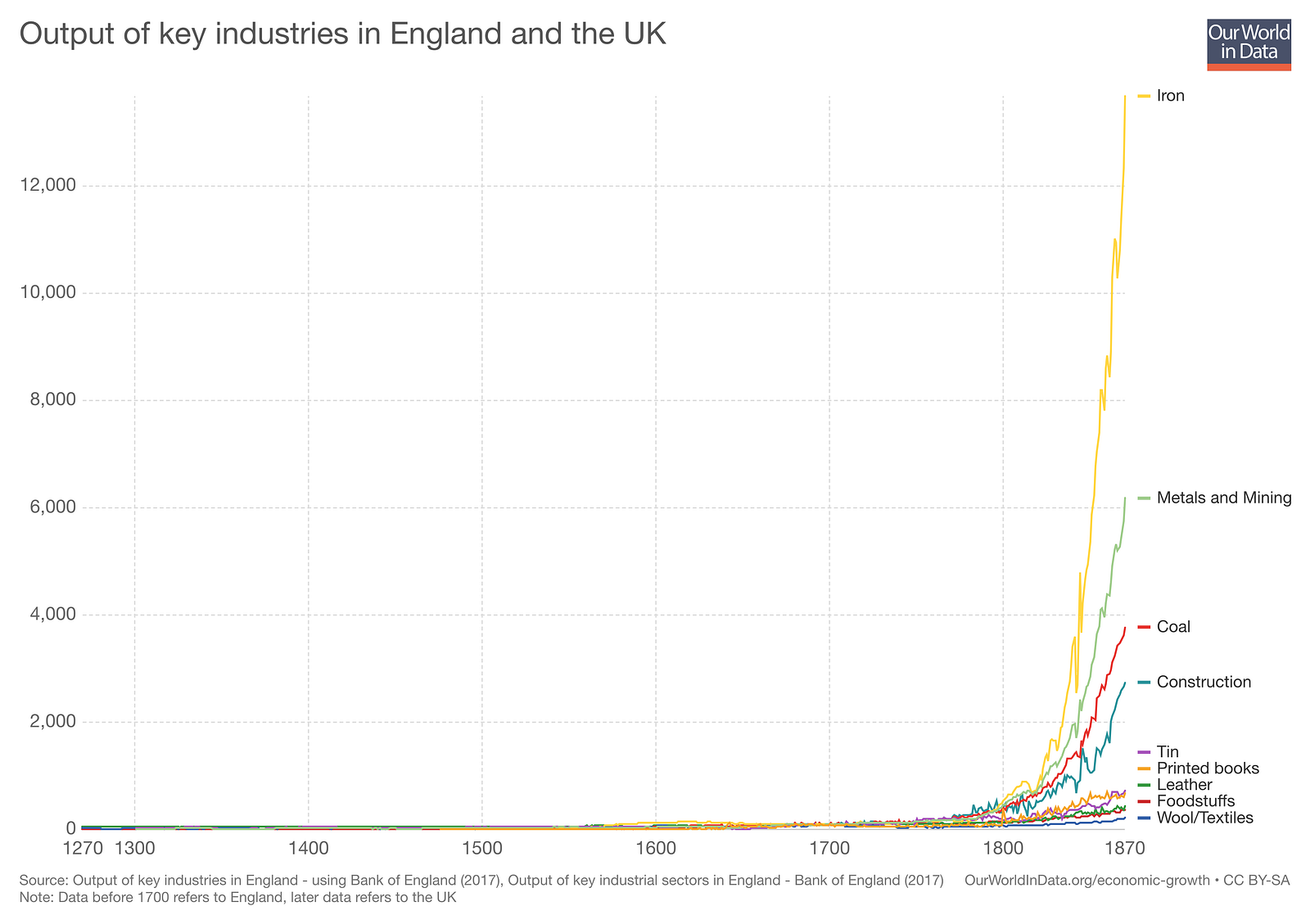
The changes in outputs of key industries created a drastically different worldThe changes in outputs of key industries created a drastically different world.
In the same vein, if you asked a factory worker from the 1970s if he believed that machines would eventually put him out of a job, he would find the question hard to understand, let alone answer. That’s why we must constantly question our understanding of the rate of technological progress and acknowledge that the vast majority of us are ill-equipped to make sense of it all.
It’s estimated that as much as half the world’s labor could be automated over the next 20 years. There are two potential outcomes of this massive disruption of the labor market:
(1) an era of mass unemployment and social instability, or
(2) an age of abundance where we are free to pursue creative work
In 1990, the real inflation-adjusted income of the median American household reached $54,932, but then started falling. By 2011, it had fallen nearly 10%, even as overall GDP hit a record high, according to The Second Machine Age by Erik Brynjolfsson and Andrew McAfee.
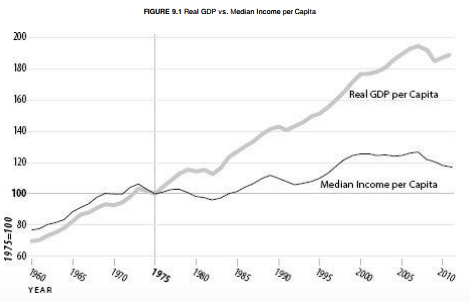
Source: The Second Machine Age
In contrast, productivity grew at an average of 1.56% per year during this period, and most of this growth directly translated into comparable increases in average income. Brynjolffson and McAfee argue that median income shrank because of increases in inequality.
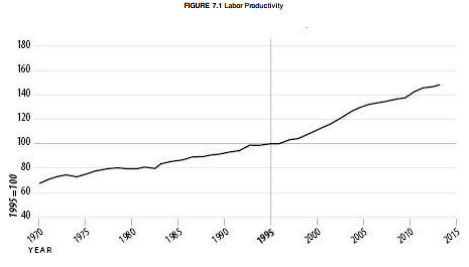
Source: The Second Machine AgeRay Dalio, founder of Bridgewater Associates , came to the same conclusion. In October 2016, Dalio evaluated the US economy by separating it into two cohorts, the top 40% and the bottom 60%.
He found that the average household in the top 40% earns four times more than the average household in the bottom 60%. While the bottom 60% has experienced some recent income growth, real incomes have been flat to slightly down since 1980 (in the same time period, income has increased for the top 40%). Those in the top 40% now have on average 10 times as much wealth as those in the bottom 60%.
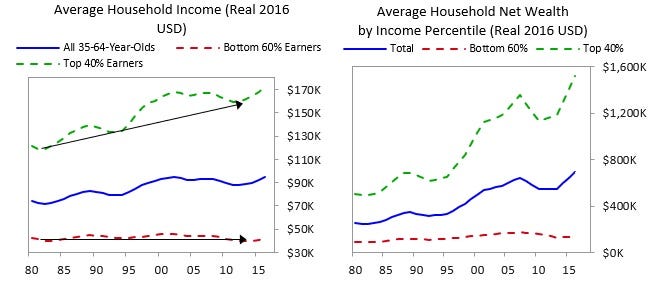
Brynjolfsson and McAfee argue that the main driver of this inequality in income is the rapid downward pressure on wages for jobs that are being fully or partially replaced with automation.
For example, if one hour’s worth of human labor can be done by a machine for one dollar, then under a free-market system, profit-focused employers won’t offer a wage of more than one dollar. That worker will need to settle for lower wages, and could be laid off entirely.
Because digital technologies can replicate innovative ideas at low cost, a person who finds a way to leverage them will earn exponentially more than has been possible --what Brynjolfsson and McAfee call a “winner-take-all” market. For example, a relatively small number of designers and engineers could create fact-checking software. Once the software works, it can be delivered to millions of users at almost zero cost. If this software gains widespread adoption, tens of thousands of fact checkers will be put out of work while a small group of individuals capture the wealth their software created.
A second important characteristic of winner-take-all markets is that individuals who create disruptive technologies don’t just get relative advantages — they win the whole market. In a traditional market, someone who was 90% as good would make 90% as much money. But in today’s market, there’s no reason to use the second-best fact-checking software when you can access the best.
In this type of economy, innovators gain disproportionate wealth while reducing demand for previously important types of labor.
This wealth gap will likely intensify if we fail to implement preemptive measures. In a hyperbolic scenario where technology causes mass unemployment, consumers will have less money to spend on products and services. Businesses will have to chase a shrinking pool of customers by cutting prices, sending the whole economy into a deflationary spiral.

The economic inequality that’s resulted from technological progress doesn’t show any signs of slowing, and the gap has implications beyond just differences in net worth. Another data point from Dalio’s study suggests that as differences in wealth get wider, premature deaths among the bottom 60% will also increase. We’ve already been seeing this trend from an increase in deaths associated with drug and alcohol use (up 100% since 2000) and an increase in suicides (up over 50% since 2000).
Unless action is taken to reduce this inequality, it is very likely that it will only continue to rapidly worsen. It won’t be an easy path -- potential solutions require major changes in social policy that can only occur through a political process and require a dramatic shift in how we distribute wealth.
If policies aimed at solving this issue are successful, there’s a chance technological advancement could create an age of abundance, where we find viable solutions to mitigate the effects of a widening income gap caused by a consolidation of wealth.
One possible solution to provide people with basic security is a Universal Basic Income (UBI). A country using this system would pay citizens a basic wage that is conditional on their participation in the economy. By providing people with a safety net given their participation in the economy, people are incentivized to be productive and given the means to participate in the market.
Some proponents of UBI argue that we’ll be able to eliminate all social welfare programs once UBI is instituted, since those programs are just alternate ways of giving people money. One income system eliminates the need to run multiple programs side by side, reducing cost and complexity.
Another potential solution is the negative income tax. Under the present tax law, we operate a positive income tax, where a household is progressively taxed after income reaches a certain cutoff point. Under a negative income tax system, a person earning less than that cutoff point has a negative taxable income of the difference between their earnings and a cutoff point. Think of the cutoff point as a mirror of progressive tax brackets — the higher a person’s total earnings are before they hit the cutoff, the less taxable income they have and the less they’ll receive from the government.
This system provides a minimum income while incentivizing people to work. Research by Brynjolfsson and McAfee shows that people still stay productive if a negative income tax is in use. For example, if a cutoff point was $3,000 in annual income, someone who earned nothing could receive something like $1,500 in negative income tax and have $1,500 in total earnings for the year, but someone who earned $2,000 might receive $500 and would still end up with higher total income.
This system incentivizes people to find work, even if the income for that work is low, because they still get an uplift from every dollar they make.
A universal basic income or negative income tax could:
A future without jobs does not equal a future without work.
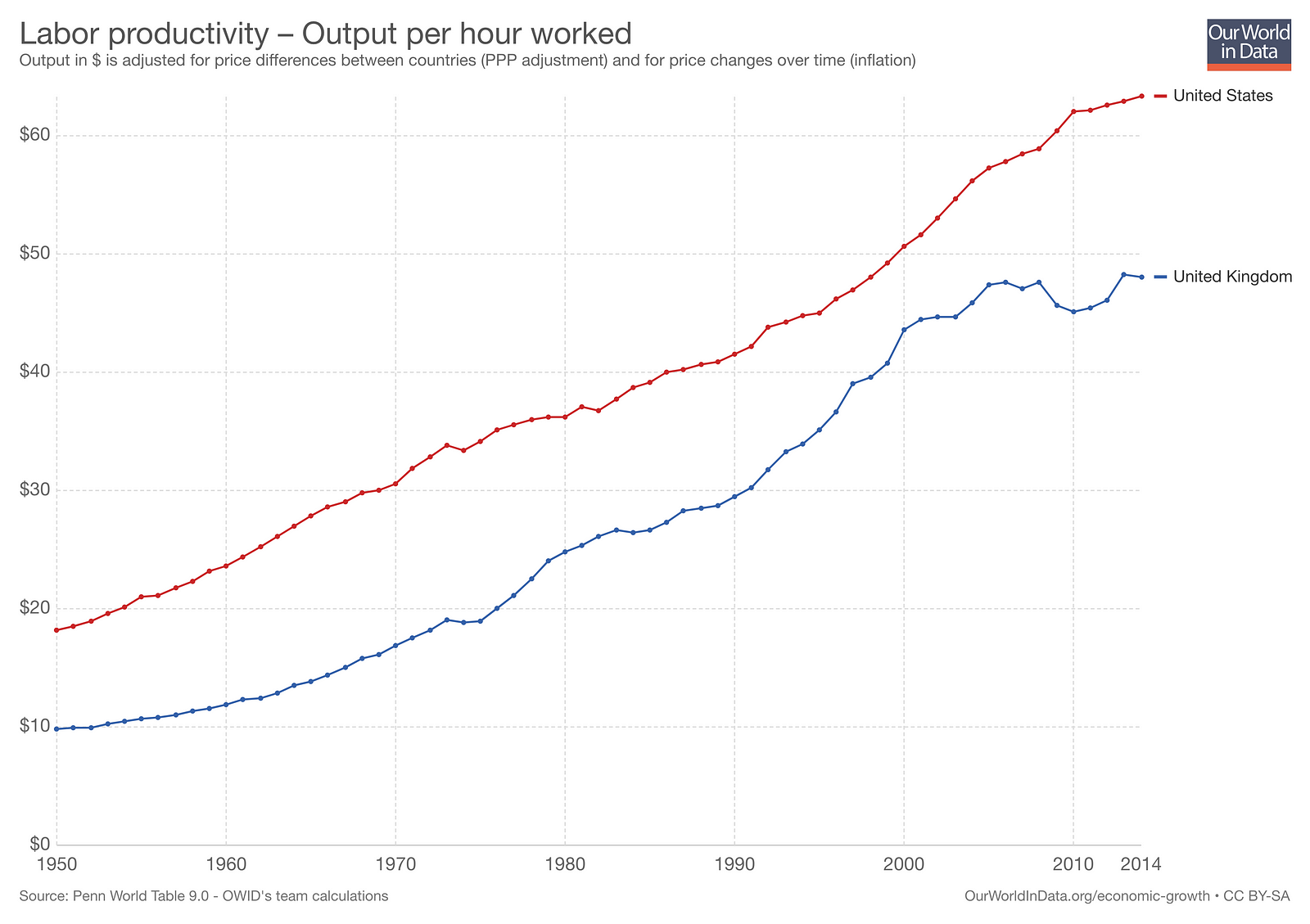
For either of these systems to work, we still have to focus on productivity, the driver of economic growth. Distributing money to be used just for consumption as a basic income rather than for improving production will diminish the value of money and stagnate the economy.
Unconditional grants of money can cause demand-pull inflation to occur because the aggregate demand for goods and services in an economy will increase more rapidly than an economy’s production.
So the key to an effective tax program would be:
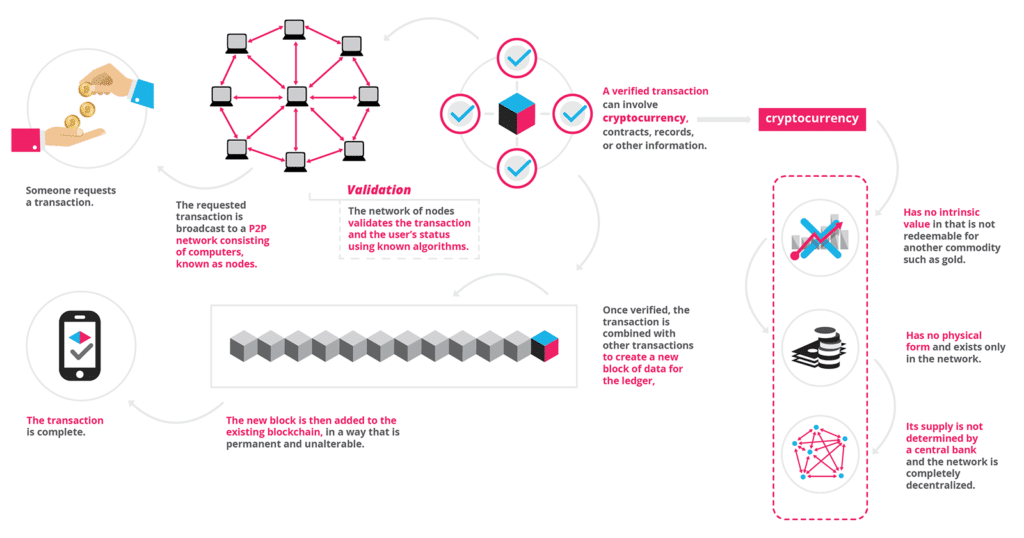
Technology like blockchain creates an unprecedented opportunity to test out decentralized decision making on resource allocation. Using a distributed ledger system to ensure money is distributed only to people who’ve done productive work, as determined by an ever-changing set of conditions or priorities monitored by an artificial intelligence engine.
While we are still far away from developing general-purpose artificial intelligence, the computational tools we have at hand are already helping us make decisions on the factors that motivate different people. For example, Eitan Hersh, a political science professor at Yale University and the author of Hacking the Electorate: How Campaigns Perceive Voters studied how campaigns use big data and machine learning to mobilize voters. The algorithms developed to analyze voter behavior might be a precursor to developing more sophisticated models that predict how best to encourage participation in the economy.
Ultimately, the question of whether to adopt a tax system that could help solve for growing inequality is more of a political than an economic question. It’ll be difficult to suggest the concept of ‘free money’ to a country built on the idea of free markets and fiscal conservatism. Any solution will have to blend new and existing policy, and allocate spending to training programs that can help workers be better equipped to work in a post-job economy, rather than just offering a universal payment for consumption.
The fact remains that no one has all the answers, and navigating the political landscape to arrive at a solution will be an uphill battle.
The policies advocated in this piece will not be easy to implement, and even if they are successfully adopted, rising inflation and decreasing wages will not be curbed immediately.
As technology continues to progress, more traditional jobs will be threatened by automation. Any solution will involve government intervention to regulate the free-market conditions that create inequality in the first place.
One potential outcome of is the call for technology to be regulated or restricted in a way so fewer jobs will be threatened. That would be a huge mistake that can happen because progress in technology is the reason why we are better off today than even just a decade ago. Research done by the team at Human Progress shows that the cost of light has fallen by a factor of 500,000, where the amount of labor that once bought 54 minutes of light now buys 52 years of light.
However, the belief that the American government agreeing to tax reformers’ idea on handing out monthly checks to support a working class is a huge leap of faith.
My hope is that we have to actively tap on technology to help make our lives better and if not, change the way we utilize it with small course corrections instead of halting advancements through regulation or denying UBI and negative income tax based on pre-conceived notions of what a free capital market is.
The policies that are currently evaluated include:
It is likely no single solution is perfect and we have to discuss and explore a multitude of policies to create a better future. While there’s a lot of work to be done, I’m just hopeful and optimistic that the future is bright.
Interested in taking a first hand look on how Artificial Intelligence can help you do your job better instead of replacing it? GrowthBot is a chat based digital assistant to help growth professionals (Sales & Marketing) grow better.
Message GrowthBot on Facebook Messenger or Slack.

Today, it’s almost impossible to maintain a successful business without a fully functional, responsive, SEO-compatible website -- but you don’t have to shell out the big bucks to afford one.
There are plenty of options for building and designing a website for free -- whether you know how to code, or not -- and these website builders are often comparable in quality to their paid alternatives, particularly for small businesses or personal brands.
The free website builders we're sharing today offer SEO benefits, embedded analytics systems, mobile optimization, and professional-looking templates. If you’re on a tight budget and can’t quite swing the paid builders, these are the next best thing. Read on to check out nine of the best free website builders, so you can build a website for free without forfeiting quality.
1. Wix: Wix is one of the most popular free website builders out there, with 110 million users. The fully hosted platform offers an easy drag-and-drop editor, and a large collection of professional-looking templates that are well-suited for small businesses, online stores, restaurants, or personal portfolios.
Wix supplies built-in Google Analytics to monitor your site, and even offers additional apps for individual preferences. If you want, Wix can even design your site for you. The biggest downside of Wix’s free version is it doesn’t come ad-free, and each page of your site will have a prominent Wix ad. Ad-free is only an option if you pay for the premium version.
2. Weebly: This open source SaaS offers web hosting, domain registration, web design, and even ecommerce functions, making it suitable for businesses and startups. Weebly’s a particularly flexible website builder, compatible with every device and platform, and easy to use -- like Wix, it has drag-and-drop functionality, as well as an integrated CMS solution, and hand-coded HTML files. The in-house editor comes with SEO tools and Google Analytics. With PayPal integration, an automatic tax calculator, digital gift cards, and more, Weebly is a smart choice for ecommerce businesses. Unlike some of its other free competitors, Weebly is ad-free.
3. WebNode: WebNode is a popular choice for both personal brands and professionals -- it’s easy to use, and you can create a website in a different language or on a different platform to suit your business’s needs. WebNode supports ecommerce stores, and the sites are compatible with Android, Mac, and IOS devices. WebNode will provide statistics to track your site’s success, free of charge, and even with the free version, you won’t have ads.
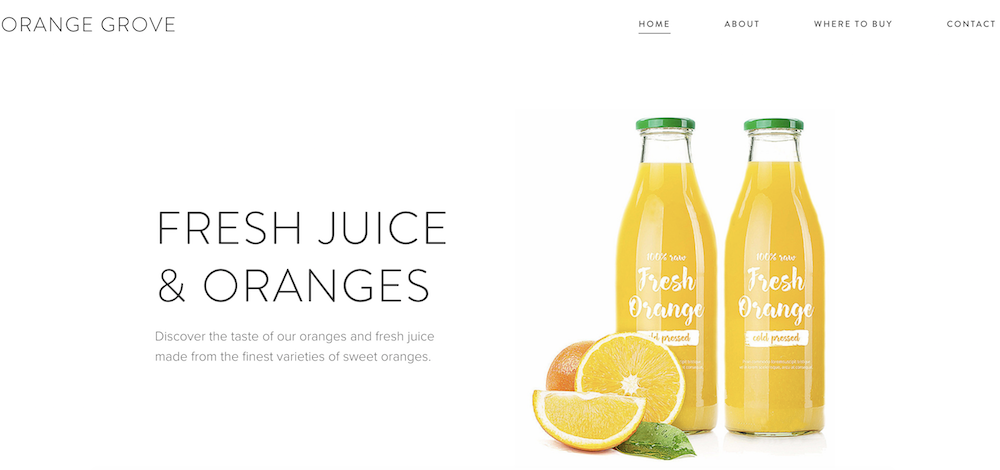
4. Jimdo: Based in Germany, Jimdo is a valuable option for international companies, with options to create a site in more than nine different languages. The builder is compatible with smartphones and tablets, and there’s a mobile app you can use to build a mobile-optimized site, as well. With no page limit and 500 MB of space, you’ll likely have more than enough space to build your site, and it even provides HTTPS/SSL encryption, meaning your visitor’s information will be kept safe. Plus, you’re able to integrate your site seamlessly with social media accounts. If you do decide to use Jimdo, beware of one thing: the builder prevents free websites from being indexed by search engines.
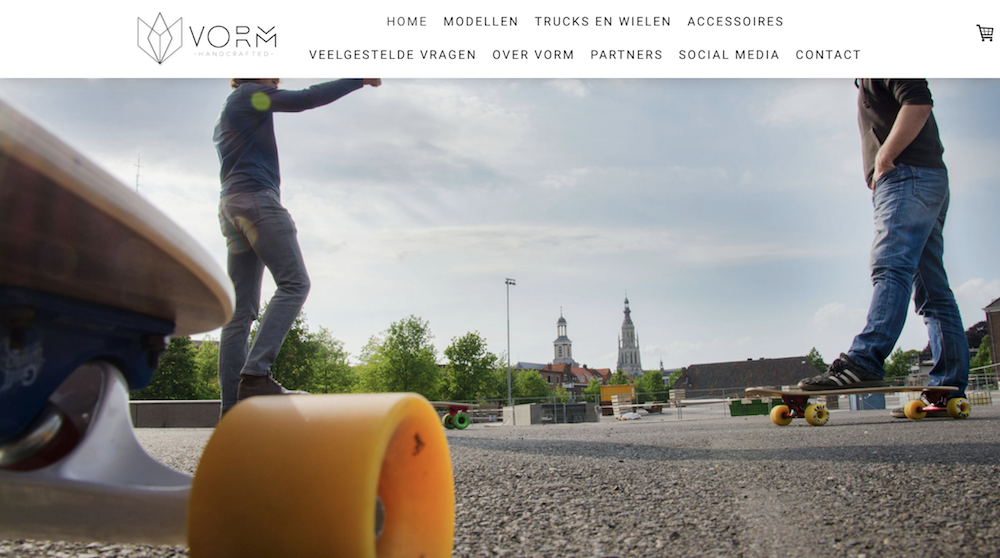
5. Mozello: One of the biggest selling-points for this Latvian-based company is the builder allows you to create a multilingual site for free -- something unmatched by other website builders. Its features include a blog, online store, SEO options, and 500 MB of storage. There is an advertisment, but it’s just a link in the footer, so most visitors won’t see it. The only drawback is the drag-and-drop system isn’t as intuitive or complex as some other options, and there aren’t a ton of design customization options.

6. Webstarts: With a wide collection of beautiful templates and a user-friendly drag and drop functionality, Webstarts makes building a website as simple as possible: best of all, whatever you see when you’re designing is exactly what your visitors will see when you publish the site. This can take some of the guess-work out of the process.

7. Webflow: While most of the other builders in this list are for people without a ton of coding knowledge, Webflow is specifically for designers and agencies who build sites for clients -- this means the HTML and CSS is entirely in your control. After you’ve built a site on Webflow, you will need to transfer it to a content management system. There are some features, like drag-and-drop widgets for adding social components, maps, and videos, that don’t require coding knowledge, but if you want the full benefits of Webflow, you’ll need to know HTML or CSS. There’s a limited set of themes, a responsive interface, and your Webflow site can be customized for desktop, tablets, or smartphones. Apart from the necessity of knowing code, one other drawback of Webflow is you can only have two pages, and there’s a limit of 500 visits for free users.

8. IM Creator: With over 11, 240, 766 sites build on IM Creator, it’s a popular option for a few reasons: there’s an easy point-and-click interface, an extensive range of templates and images, and unlimited web hosting and domain services. Plus, the platform is scalable, and you can have either single or multipage layouts. This builder is unique for its built-in ecommerce tools, and offers SEO and Google Analytics to fully optimize your site for search engines.
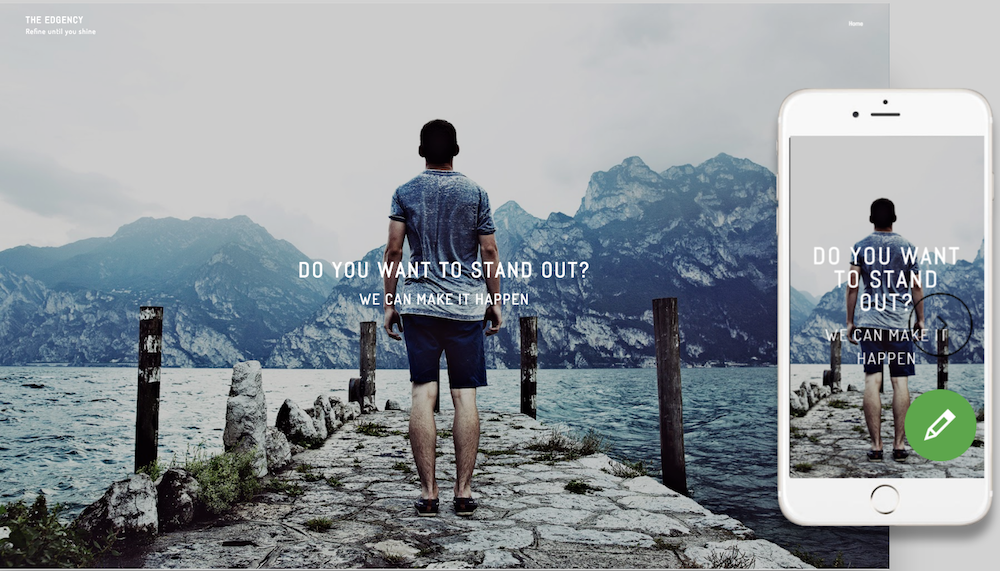
9. SITE123: Arguably one of the most flexible and easy-to-use builders, Site123 lets you customize anything and offers a one-click installation wizard with graphics and templates. Site123 stands out as particularly helpful with its free images library, professional fonts to add visual elements to your site, and creative DIY plans for creating multiple pages (which are unlimited). Plus, since it offers web hosting domain registration, 500 MB storage space, Google Analytics, and is ad-free, you won’t feel pressured to switch to a paid plan.

And there you have it! Since all of these website builders are free, try out a couple if you’re unsure of the best fit. In particular, take note of what you really want to get out of your site to ensure your needs will be met by one of these free builders.